Carbonate Sedimentology

| |
| Prof. Garver |
| Env. Science & Policy |
| Geosciences |
| Field Science at Union |
| Union |
| Reefs, hurricanes, and carbonate sediments |
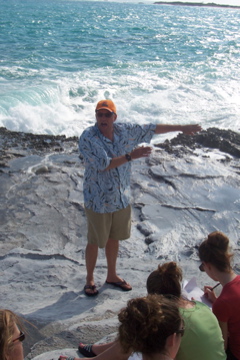
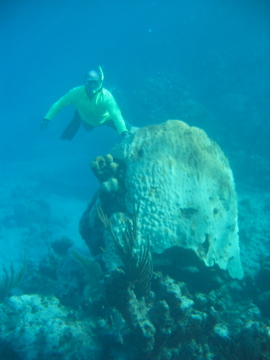
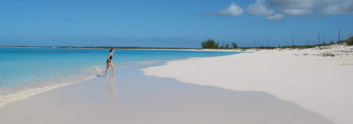
Carbonate Sedimentology offers a detailed examination of carbonate sedimentology and depositional environments through lab, and modern and ancient field examples. This course is perfect for Biology, Environmental Studies, and Geology majors. The purpose of the course is to give students a more detailed view of sedimentary processes, animal-sediment interactions, and the stratigraphic record of these processes. The course includes ten weeks examining sediment samples, rocks and local examples of different depositional environments preserved in the stratigraphic record. The heart of the course is a field trip to the Bahamian Field station on San Salvador Island (Bahamas). At the Field Station, students examine modern and ancient examples of various important depositional environments including reefs, lagoons, beaches, tidal flats, hypersaline lakes, and windblown subaerial areas. The diversity of modern settings is paralleled by an equal diversity of ancient rocks, which serve as a critical comparison. Who should take this course? This is a elective course for the Geosciences, Biology, and Envvironmental Science. The field trip to the Bahamas occurs during the winter break, and is required. Additional costs are associated with this seven day trip, but students may apply to the Geology Field Fund to help defray the extra cost. Offered: Various years FALL Term
MAIN WEB PAGE: HERE |
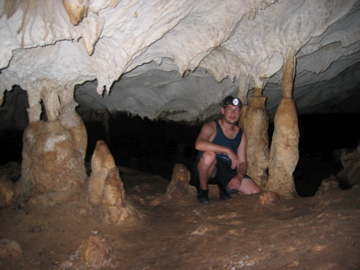
| Climate, sedimentology, and animal sediment interactions | ||
|
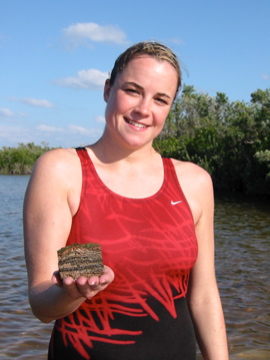
Algal mat that grows in hypersaline conditions |
|